Where is it
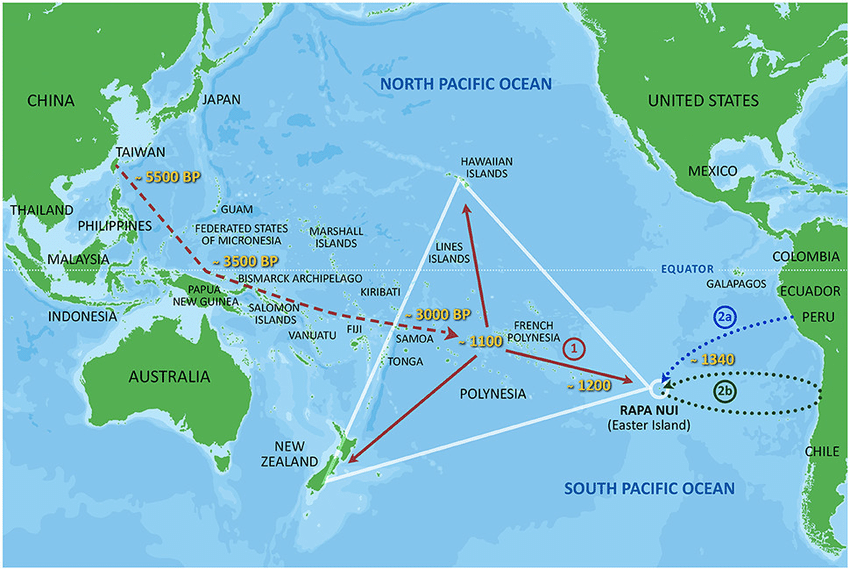
It is located approximately 3,700 kilometers off the coast of Chile and is immersed in the Southern Pacific Ocean. It marks the southeast corner of the so-called Polynesian Triangle, with Hawaii to the north and New Zealand to the southwest.
Geological origin:
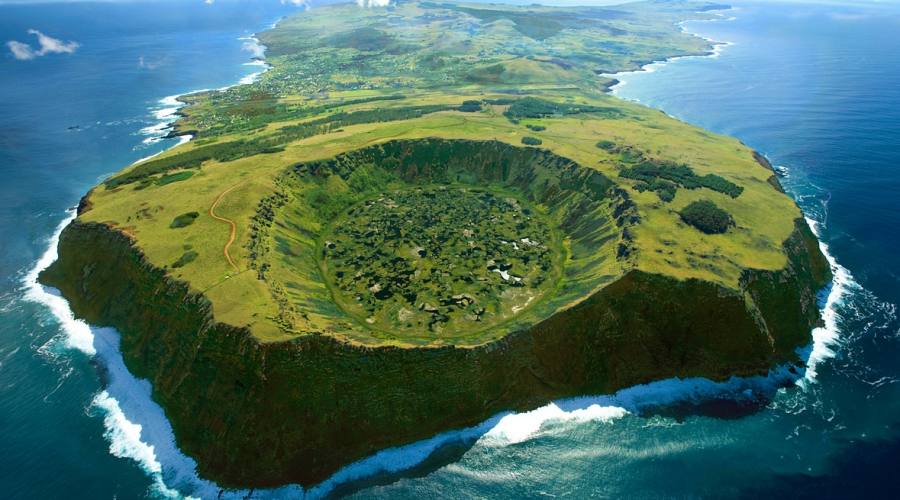
Easter Island or Rapa Nui is a typically volcanic island generated by the lava production of three main volcanoes (Rano Kau, Terevaka and Poike) responsible for having created a single triangular mass with a maximum length of 24 km with a maximum width of 12 km. The volcanic formations have been inactive for over 10,000 years.
Morphology of the territory

The surface of the island is approximately 163.3 km2 and its highest point is represented by the summit of the Terevaka Volcano at 511 m high. The other two highest points are Rano Kau, 324m, and Poike, 377m, both volcanic cones. The rest of the island is made up of twelve hills, in full contrast with the coast which appears jagged and rocky. In addition to the main island, Rapa Nui, there are other small islands and islets called Motu in the indigenous language: Motu Nui, Motu Iti and Motu Kao to the South West, Motu Tautara to the West and Motu Marotiri, with its five islets, to the extreme south east of the island. Together with its smaller islands, Easter Island is the summit of a large volcanic cone that rises from the ocean floor from a depth of more than 2,000 meters. This mountain is part of the Sala y Gómez ridge, a mostly underwater mountain range. The archipelago closest to Easter Island is the Southern Islands archipelago, with the islands of Tubuai and Rapa. The only beaches are those of Anakena and Ovahe made up of coral and volcanic sand.
Hydrology of the island
The best-known lake on this island is Rano Kao, which is said to be the crater of a volcano filled with water.The only river on Easter Island has a course that crosses the entire island, almost dividing it into 2 parts.

Climate

Easter Island has a subtropical climate, that is, hot and muggy in summer and mild in winter, with average temperatures hovering around 21 degrees centigrade and with almost no temperature change between seasons. The island is therefore exposed for most of the year to the trade wind, a wind that blows in a north-east direction.